

On this day in:
1696
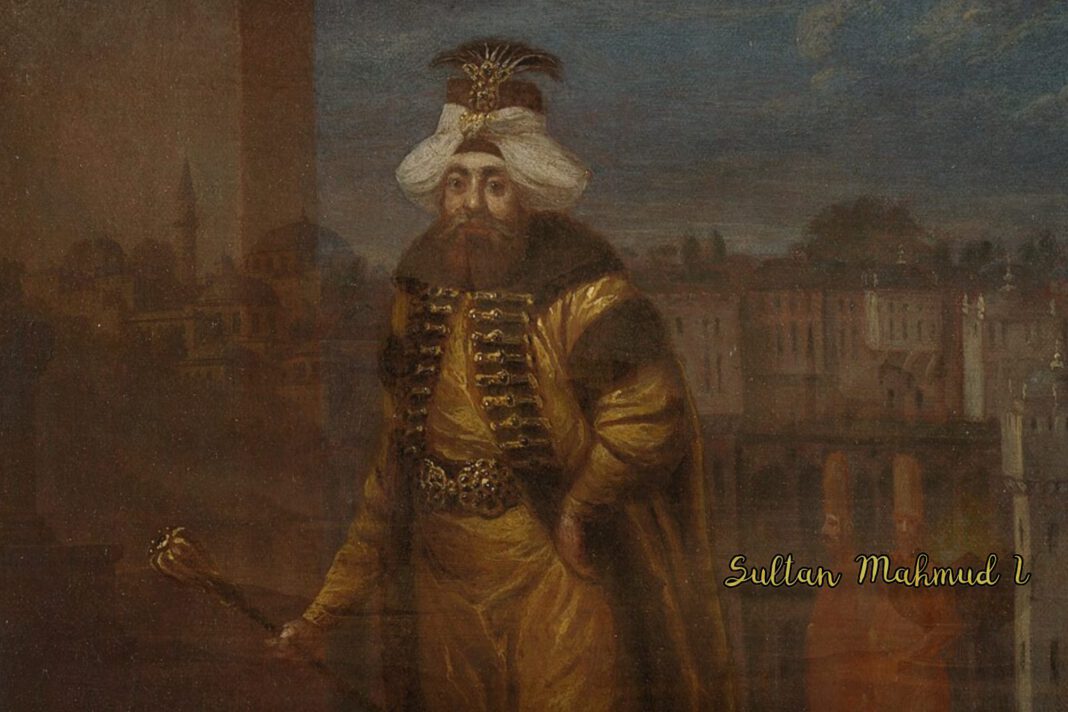
Mahmud I was born. As an Ottoman sultan who succeeded to the throne in 1730, he quickly restored order in Constantinople following the volatile Patrona Halil uprising. During his notable reign, the Ottomans fought a highly successful war against Austria and Russia, which ultimately culminated in the landmark Treaty of Belgrade in 1739.
1934
Paul von Hindenburg, the German field marshal during World War I and second president of the Weimar Republic (1925–1934), died. His presidential terms were wracked by severe political instability, the Great Depression, and the fateful rise to power of Adolf Hitler, whom he reluctantly appointed chancellor in 1933.
1935
The Government of India Act was passed by the British Parliament. It officially took effect on April 1, 1937. This sweeping constitutional reform officially detached both Burma and Aden from the administration of British India, establishing them as separate Crown colonies.
1941
An agreement for urgent American military assistance to the Soviet Union was finalized, just six weeks after the surprise Nazi invasion of the USSR. This critical pact allowed the cash-strapped Soviets to immediately secure U.S. arms and equipment, laying the groundwork for the massive Lend-Lease program that followed later that autumn.
1968
On a station platform in Bratislava, Czechoslovak leader Alexander Dubček awaited a meeting that would ultimately signal the end of his brief experiment in ‘socialism with a human face.’
He and President Ludvík Svoboda were there to receive Soviet leader Leonid Brezhnev and other Kremlin officials. They were all arriving to attend a high-stakes summit with leaders from Eastern European communist states. The resulting conference culminated in an agreement to strictly reinforce the leading role of the communist parties across the Eastern Bloc.
1990
Iraq invaded neighboring Kuwait, ending months of escalating disputes over oil production, “war debts”, and post‑war economic policy. During the 1980–1988 Iran‑Iraq War, Kuwait and other Arab Gulf states had supported Iraq, viewing it as a strategic barrier against the Iranian clerical regime. After the war, Iraq’s strengthened military position raised regional concerns, and Kuwait adopted economic measures that Baghdad interpreted as undermining its post-war recovery. The invasion prompted a U.S.-led coalition to liberate Kuwait in 1991. Iraq then faced 13 years of sanctions, shaping regional politics until the 2003 US-led invasion.
2000
A series of coordinated massacres in Kashmir, India left roughly 90 people dead, the majority of whom were Hindu pilgrims and local laborers.
While the Indian government blamed Pakistan-backed Islamist militant groups for orchestrating the slaughter, the rebel groups denied any involvement. In response, Pakistani authorities accused India of intentionally exploiting the scene to inflame communal tensions across the volatile region.