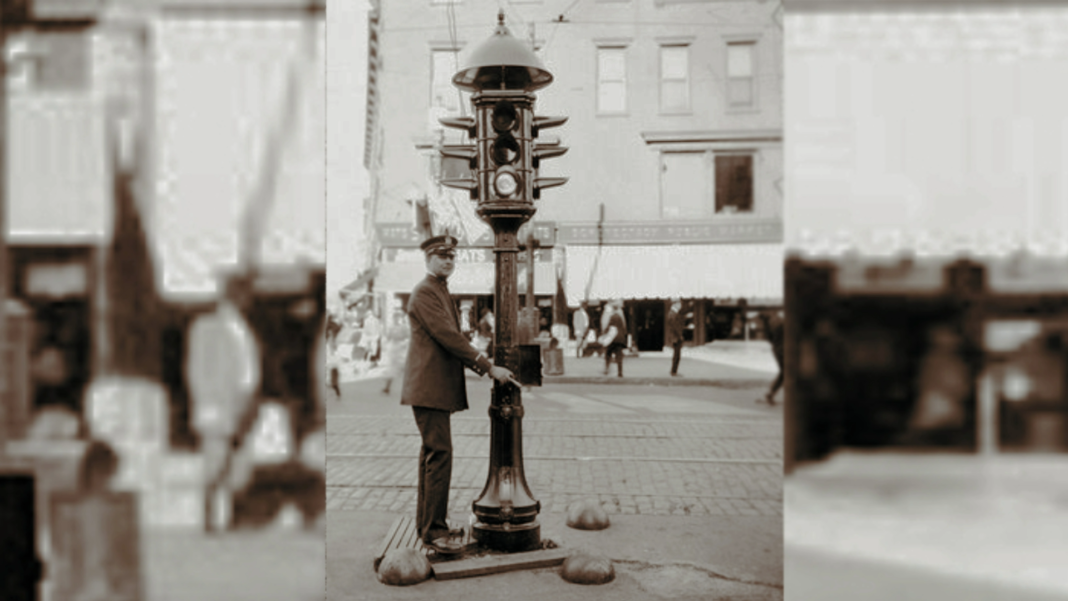


On August 5th, 1914, a quiet but revolutionary moment unfolded at the intersection of Euclid Avenue and East 105th Street in Cleveland, Ohio, USA. As the world was being pulled into the First World War, the United States witnessed a different kind of turning point: the installation of the first electric traffic signal system.
It was a modest structure by modern standards — two pairs of lights mounted on poles, operated by a police officer in a nearby booth — yet it marked the beginning of a new era in urban life. For the first time, electricity was used to impose order on the increasingly chaotic flow of automobiles, streetcars, horses, and pedestrians.
The system was designed by James Hoge, who recognized that cities needed more than whistles, hand signals, and shouted commands to manage the rising tide of motor vehicles. His invention used red and green lights, accompanied by a buzzer to alert drivers when the signal changed. Simple, functional, and surprisingly modern in concept, Hoge’s design laid the foundation for the traffic control systems that shape every city today.
The need for such innovation had been building for decades. By the early 1900s, cars were no longer luxury curiosities — they were multiplying rapidly, and streets were becoming dangerous. In 1908, New York City recorded more than 700 traffic deaths, most involving pedestrians.
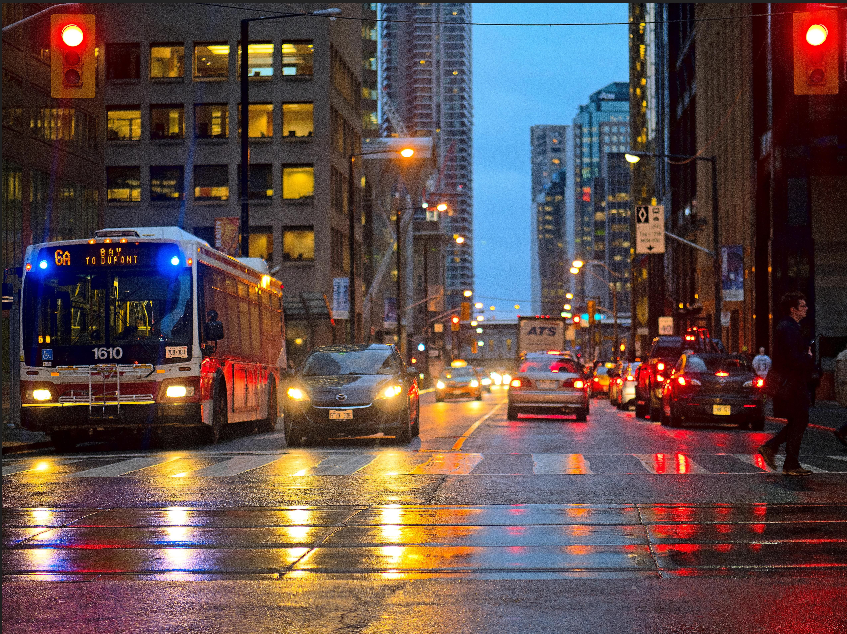
Photo Credit: Milan Cobanov

Urban planners and police departments were desperate for solutions. Before electric signals, cities experimented with manually operated semaphores, gas‑lit signals, and even elevated towers where officers directed traffic like conductors leading an orchestra. These methods helped, but they could not keep pace with the accelerating world.
Hoge’s electric signal changed everything. It introduced automation, visibility, and standardization — three principles that would define traffic management for the next century. Within a decade, cities across the United States began installing electric signals. In 1920, Detroit engineer William Potts added the yellow light, creating the familiar red‑yellow‑green triad that remains universal today. By the 1930s, interconnected systems allowed multiple intersections to coordinate their timing, reducing congestion and smoothing the flow of vehicles through downtown districts.
The evolution continued as technology advanced. The mid‑20th century brought pressure‑sensitive pads embedded in pavement, allowing signals to respond to real‑time traffic. Later came computerized control centers, adaptive timing algorithms, and sensors capable of detecting not only cars but bicycles and pedestrians. Today, cities experiment with AI‑driven systems, smart intersections, and vehicle‑to‑infrastructure communication — all descendants of that first electric signal in Cleveland.
Yet despite all the innovation, the core idea remains unchanged: a simple visual language that keeps people safe and cities moving. The traffic light is one of the rare inventions that became truly universal — a symbol understood in every country, by every driver, in every era.
And it all began on August 5th, 1914, with a pair of electric lights flickering to life on a Cleveland street corner, quietly reshaping the future of urban civilization.