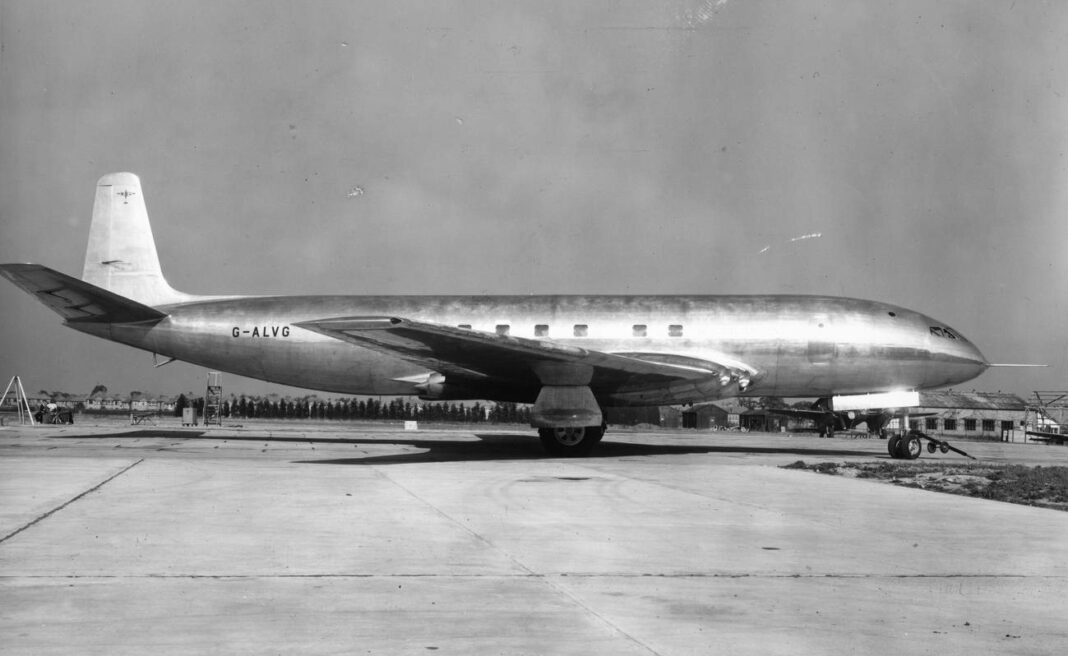


On this day in 1949, in Britain at Hatfield Aerodrome in Hertfordshire, the sleek silver prototype of the de Havilland Comet 1 lifted off the runway and entered history as the world’s first commercial jet airliner.
The flight lasted just over half an hour, but its significance was monumental. Powered by four de Havilland Ghost turbojet engines embedded cleanly in the wing roots, the Comet climbed smoothly to 10,000 feet before performing a low pass over the runway in salute to the engineers who had built it.
This maiden flight was the culmination of years of ambition and experimentation. During World War II, Britain had recognized that jet propulsion could redefine air travel. The Brabazon Committee, formed in 1943, recommended developing a pressurized, long‑range aircraft that could carry mail and passengers faster than any propeller‑driven machine. De Havilland took up the challenge, designing both the airframe and the engines — an unprecedented undertaking at the time.
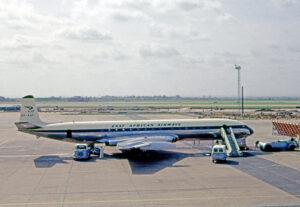
Photo Credit: Ruth AS
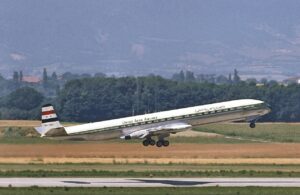
Photo Credit: Lars Söderström
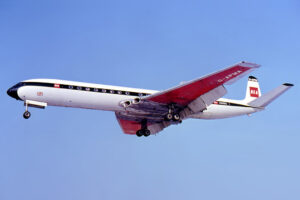
The Comet’s design was revolutionary. Its clean aerodynamic lines, buried engines, and fully pressurized cabin promised a new era of comfort and speed. Early tests showed it could cruise near 500 mph and soar at altitudes around 40,000 feet, far above turbulent weather and piston‑engine limitations. Passengers would experience quieter cabins, smoother flights, and dramatically shorter travel times.
After its first flight, the Comet underwent three years of rigorous testing and refinement. On May 2nd, 1952, BOAC launched the world’s first commercial jet service using the Comet 1A, flying paying passengers from London to Johannesburg. It was a triumph of British engineering — the jet age had officially begun.
But the Comet’s story carried both glory and tragedy. Within its first year of service, several catastrophic accidents revealed a deadly flaw: metal fatigue caused by repeated pressurization cycles. Investigators discovered stress concentrations around the aircraft’s square windows and structural weaknesses that had never been encountered in jet‑powered commercial aviation. The fleet was grounded, redesigned, and eventually reborn as the safer Comet 4 series.