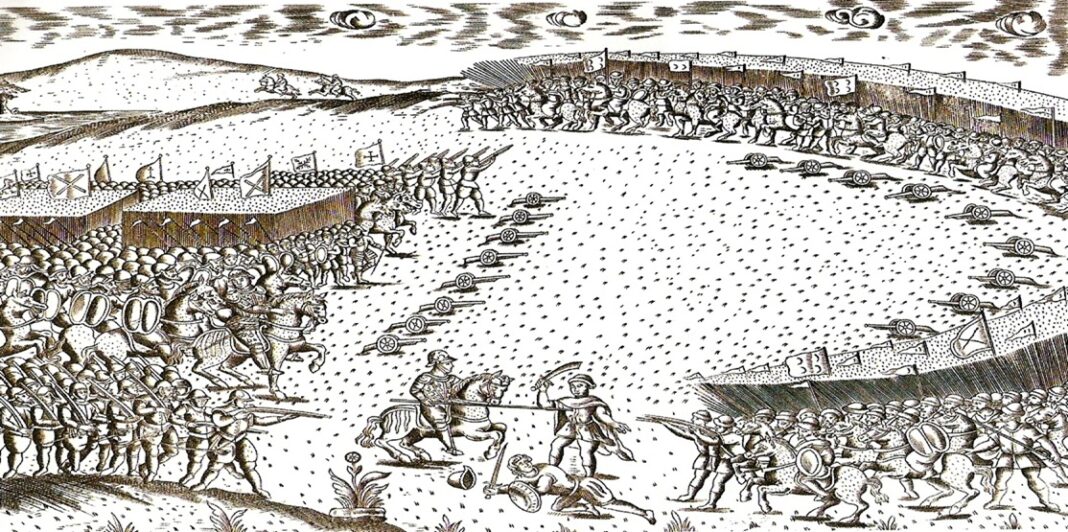


Portuguese forces led by King Sebastian I, allied with Moroccan troops loyal to the deposed Sultan Abu Abdullah Mohammed II, clashed with the army of Moroccan Sultan Abd al Malik I at the Battle of Alcácer Quibir on August 4th, 1578 in northern Morocco. King Sebastian rode into the Battle with the kind of certainty only youth can produce.
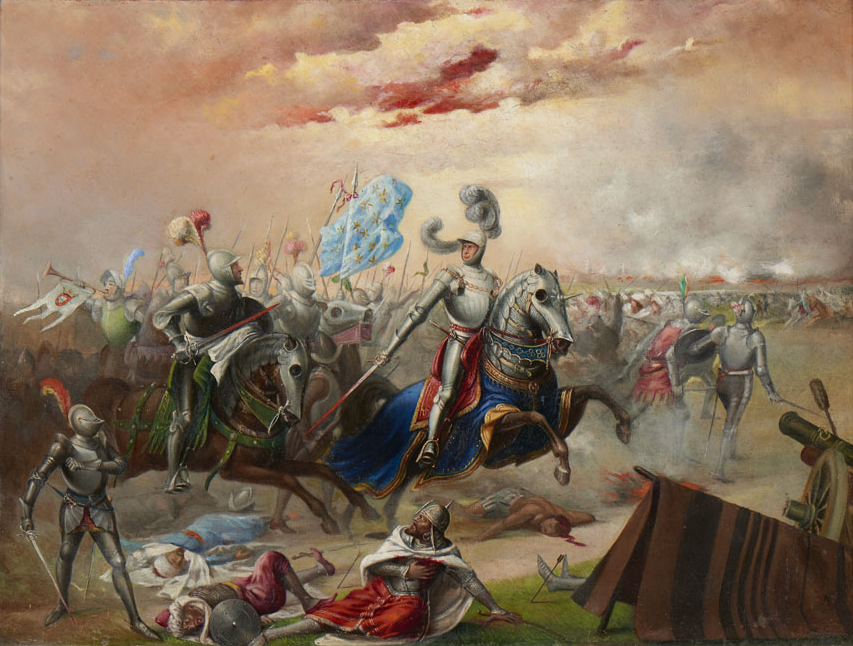
The King was twenty four, armored in brilliance and conviction, leading not only his own Portuguese forces but also the scattered loyalists of his deposed ally. The morning was hot, the air was thick with dust, and the king — pale, slender, almost luminous in his white armor — insisted on riding at the very front. He believed destiny favored boldness. He believed God rewarded courage. And he believed he was chosen.
Witnesses later recalled a single moment: Sebastian urging his horse forward, breaking from the formation, charging directly toward the enemy lines. He did not wait for the infantry to close the gap. He did not look back. He simply lowered his lance and disappeared into the smoke. That image — a king vanishing into the haze of battle — became the last confirmed sighting of him alive.
What followed was catastrophic.
The Portuguese army collapsed under the weight of Moroccan and Ottoman firepower. Thousands died. Thousands more were taken prisoner. The battlefield, once the stage for Sebastian’s grand crusading vision, became a graveyard of shattered armor and unrecognizable bodies. When the dust settled, the king was nowhere to be found.
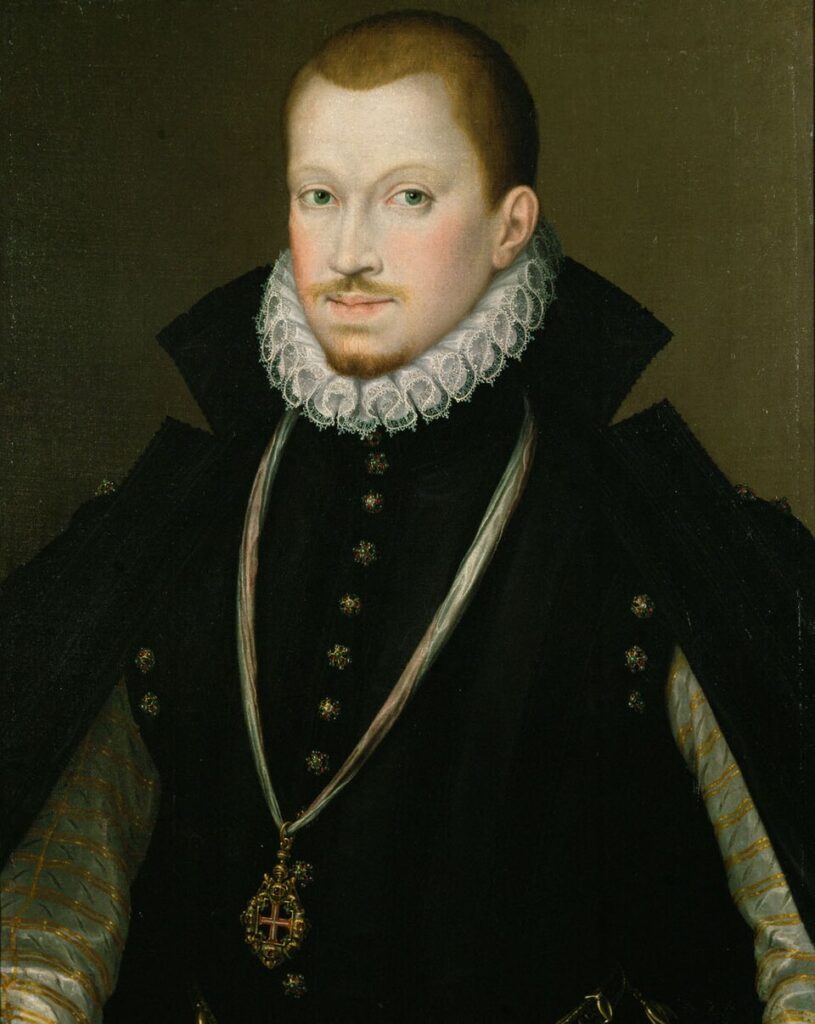
King Sebastian of Portugal by Alonso Sánchez Coello
Efforts to retrieve his body began immediately. Moroccan commanders ordered searches. Portuguese captives begged for news. Envoys scoured the field, lifting corpses, examining faces, comparing armor fragments. Some claimed a body had been found, but the identification was uncertain. Others insisted Sebastian had been taken alive, perhaps wounded, perhaps disguised. Rumors multiplied: a secret burial, a hidden escape, a king wandering the desert. Every version contradicted the last.
Spain later presented a corpse said to be Sebastian’s, but Portugal rejected it — the features didn’t match, the armor was wrong, the story inconsistent. No official confirmation ever emerged.The absence of a body became the spark that lit a legend.
In the years that followed, Portugal fell into crisis. Without an heir, the throne passed to the Spanish crown, and the country entered a long period of foreign rule. But among the people, a different narrative grew: Sebastian had not died. He would return. He would reclaim the throne. He would save Portugal.This belief — Sebastianism — became one of the most enduring messianic myths in European history.
Pretenders appeared, claiming to be the lost king. Crowds gathered to hear them. Hope clung to the idea that a king who vanished without a trace might one day reappear just as suddenly. But destiny kept its silence. No body was ever found. No truth ever surfaced. And the young king who charged into the smoke remained exactly where legend placed him: suspended between fact and myth, swallowed by a battlefield that never gave him back.