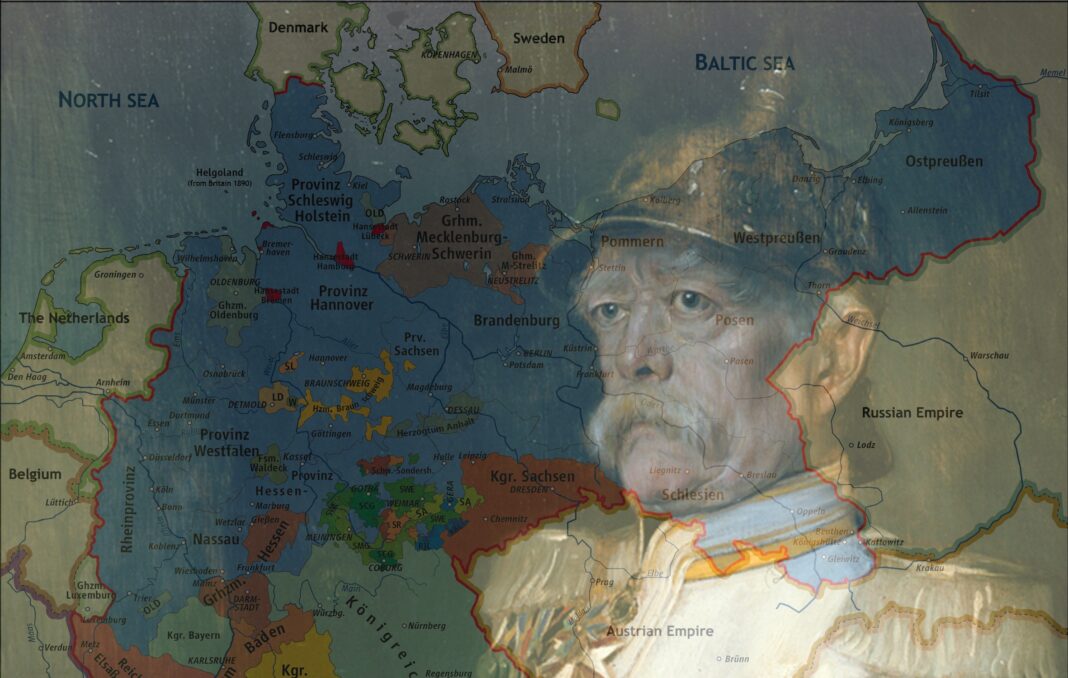


Otto von Bismarck, the politician that was credited with unifying Germany died on this day in 1898. His death marked the end of one of the most consequential political lives in modern history.
It might be safe to say that few statesmen have shaped their era with such force, precision, and audacity as Bismarck did, and even fewer still have left behind a geopolitical architecture that endured long after their departure.
Bismarck was not merely a politician; he was a strategist of rare instinct, a master of timing, and the architect of a new European order built through war, diplomacy, and an almost theatrical sense of statecraft.
When Bismarck became prime minister of Prussia in 1862, the kingdom was widely regarded as the weakest of Europe’s five major powers. Austria overshadowed it in prestige, France in influence, Russia in size, and Britain in global reach.
Prussia was respected, but not feared. It was a disciplined military state with a proud tradition, yet it lacked the political weight to shape the continent. Bismarck changed that with astonishing speed.
He believed that the age of liberal revolutions and parliamentary rhetoric was giving way to an era defined by power, industry, and national identity. His famous declaration that the great questions of the time would be decided “not by speeches and majority votes, but by iron and blood” was not a rejection of politics, but a recognition that politics alone could not unify the German peoples. Prussia needed victories — diplomatic, military, and symbolic — to become the nucleus of a new nation.
Bismarck achieved three.
His first major triumph came in 1864, when Prussia and Austria jointly defeated Denmark in a brief but decisive war over the duchies of Schleswig and Holstein. The conflict seemed minor to outsiders, but Bismarck used it as a lever to provoke tensions with Austria, setting the stage for his next leap.
Two years later, in 1866, Prussia crushed Austria in the Seven Weeks’ War — a lightning campaign that stunned Europe. Austria was expelled from German affairs, and Prussia emerged as the dominant power among the German states.
But Bismarck’s masterpiece was yet to come.
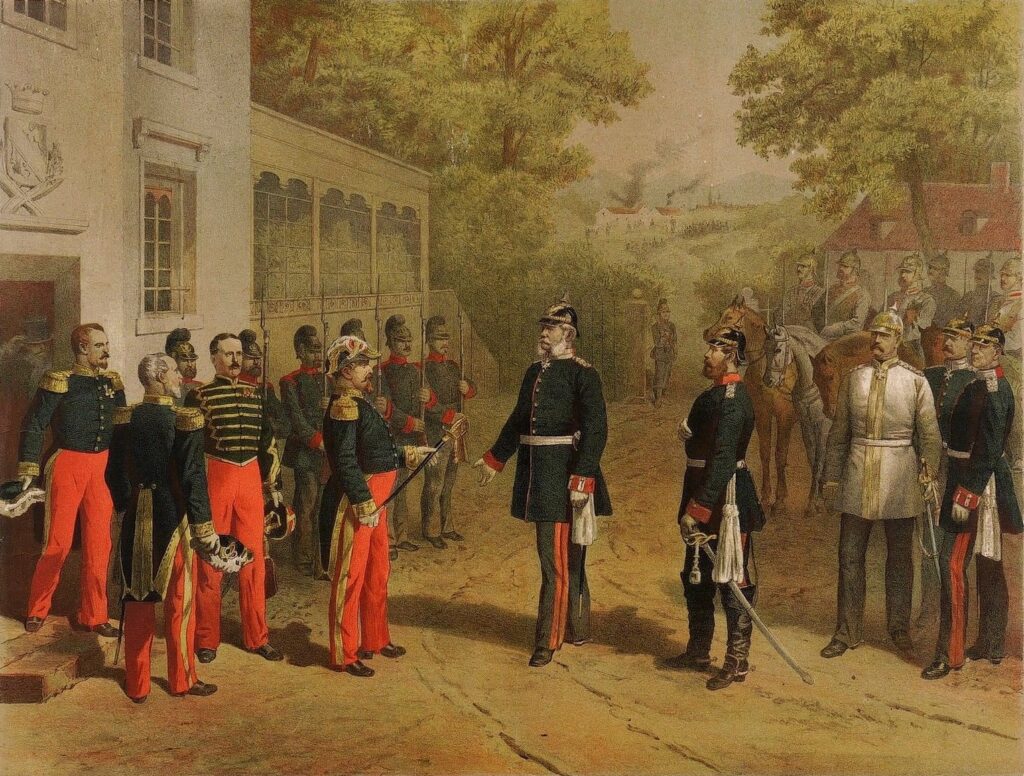
In 1870, he maneuvered France into declaring war on Prussia, knowing that a foreign threat would rally the German states behind him. The Franco‑Prussian War was swift and devastating. Prussian forces encircled Paris, Napoleon III fell, and France suffered a humiliating defeat.
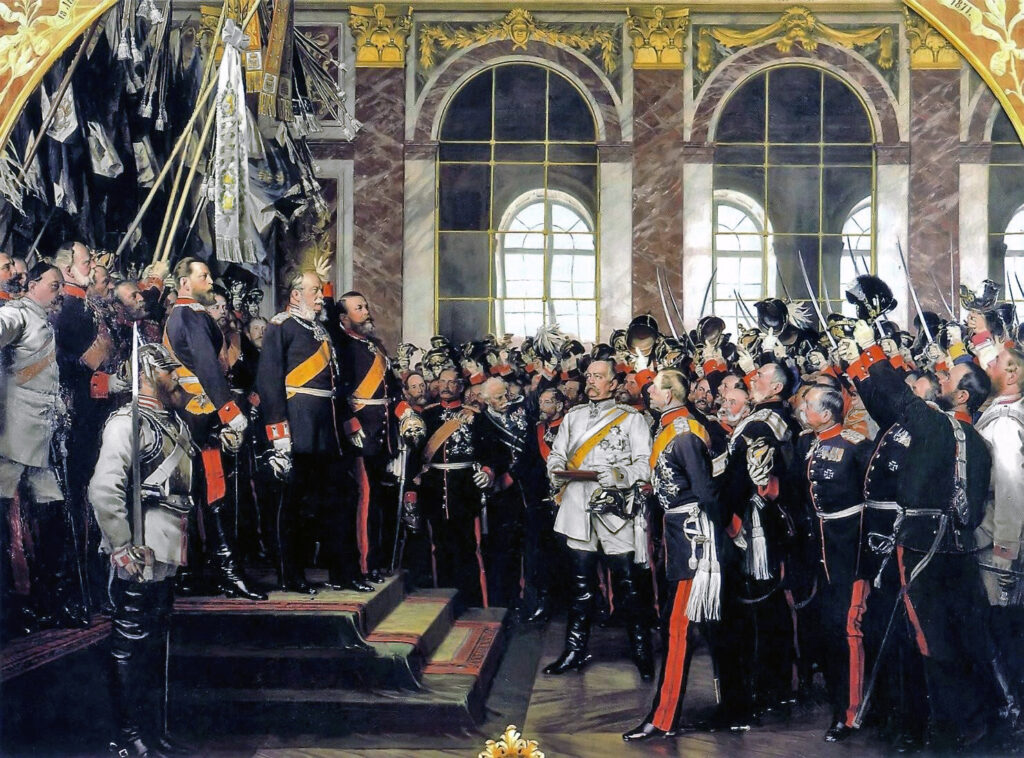
In the Hall of Mirrors at Versailles, under the glittering chandeliers of the French monarchy’s most iconic palace, Bismarck proclaimed the creation of the German Empire. King Wilhelm I of Prussia became the German Emperor, and Bismarck — the Iron Chancellor — became the most powerful statesman in Europe.
In less than nine years, Prussia had won three wars, unified Germany, and transformed the balance of power on the continent. A new empire stood in the heart of Europe, industrializing rapidly, bristling with confidence, and arousing both envy and fear among its rivals. Bismarck had forged a nation, but he understood that maintaining it required a different kind of genius.
His diplomacy after 1871 was a study in restraint. He knew Germany was strong enough to threaten Europe, but not strong enough to dominate it. So he built a complex web of alliances designed to isolate France, reassure Russia, and keep Austria close.
He avoided colonial adventures, discouraged naval expansion, and warned against provoking Britain. His goal was simple: preserve peace by preventing any coalition from forming against Germany.
For nearly two decades, his system worked. Europe remained stable, and Germany prospered. But Bismarck’s dismissal in 1890 by the young Kaiser Wilhelm II unraveled the careful architecture he had built.
Germany pursued colonies, expanded its navy, and adopted a more confrontational foreign policy. The alliances Bismarck had crafted dissolved, and within a generation Europe descended into the First World War — a conflict Bismarck had foreseen and feared.
When he died in 1898, Bismarck was already a legend. Admirers saw him as the greatest statesman of the 19th century, a man who unified a nation and kept the peace. Critics viewed him as a manipulator who built a powerful state without preparing it for responsible leadership.
However, all agreed on one point: he had shaped Europe more profoundly than any other leader of his age.
Bismarck’s legacy remains complex, contested, and monumental — the work of a man who understood power not as an end, but as a tool for building something larger than himself.