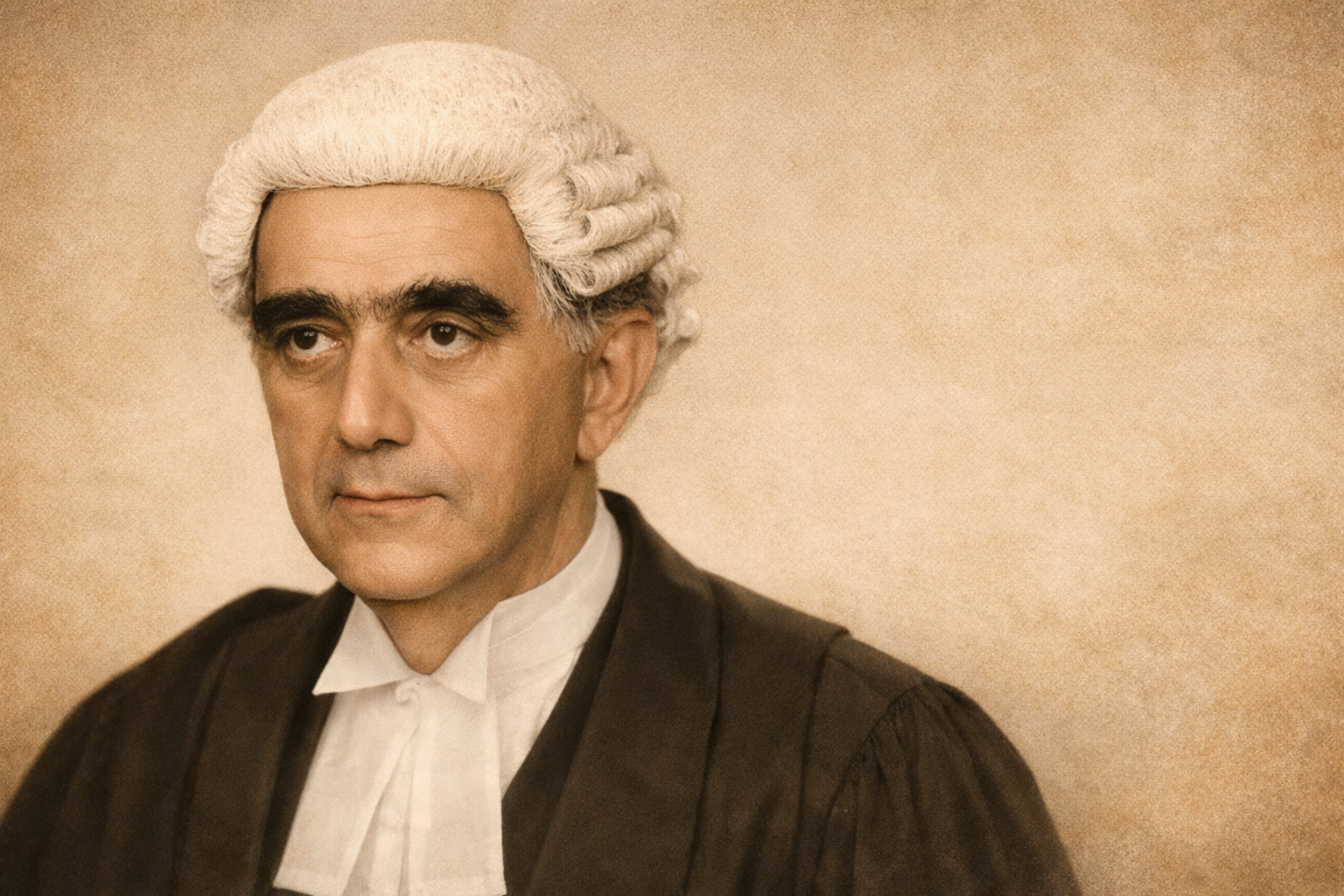
It might raise an eyebrow to learn that Singapore’s first Chief Minister was a Jew of Iraqi descent. Born on this day, March 12, 1908, David Saul Marshall remains one of the most compelling and charismatic figures in Singapore’s political history — a man whose fiery oratory, fierce independence, and unwavering commitment to justice left a mark far larger than the small island he called home.
As Singapore’s first Chief Minister, Marshall helped shape the nation’s political identity during a turbulent era of colonial rule, social unrest, and rising demands for self‑determination. He was the eldest of seven children in a Baghdadi Jewish family that had emigrated to Singapore in 1900, becoming part of a small but influential community woven into the island’s multicultural fabric.
Marshall’s early life was defined by modest means, hard work, and a strong sense of responsibility — qualities that would later anchor his public career. After studying law in London, he returned to Singapore and quickly built a reputation as one of the island’s most formidable criminal lawyers. His courtroom presence was legendary: sharp, theatrical, and relentless. He reportedly secured acquittals in more than 90 percent of the murder cases he defended, a statistic that cemented his status as a legal powerhouse.
But it was politics — not law — that would thrust Marshall into the national spotlight. In 1955, he led the Labour Front to a surprise victory in Singapore’s first fully elected Legislative Assembly, becoming the island’s first Chief Minister. His government inherited a society simmering with labor strikes, communist influence, and widespread dissatisfaction with British colonial rule. Marshall, a passionate believer in freedom and dignity, pushed aggressively for full self‑government, insisting that Singaporeans deserved the right to determine their own future.
His negotiations with the British, however, were fraught. Marshall’s uncompromising style — admired by the public but resented by colonial officials — led to a breakdown in talks in 1956. True to his principles, he resigned, declaring he would not remain in office without meaningful progress toward independence. Though he stepped down, his efforts paved the way for later negotiations that ultimately succeeded.
After leaving the Labour Front, Marshall founded the Workers’ Party in 1957 — today one of Singapore’s major political forces. Yet he soon withdrew from frontline politics, returning to the courtroom where he continued to champion the underdog with the same fire that had defined his public life.
In 1978, he accepted a new role as Singapore’s Ambassador to France, a position he held for more than a decade. Even in diplomacy, Marshall remained unmistakably himself: eloquent, principled, and unafraid to speak his mind. He represented Singapore with distinction, earning respect across Europe for his intellect and integrity.
David Marshall passed away in 1995, but his legacy endures. He is remembered as a man of fierce conviction — a leader who fought tirelessly for justice, workers’ rights, and political freedom. In a nation known for pragmatism, Marshall stood out as a romantic idealist, a believer in the power of words, and a defender of the ordinary citizen.
A rebel, a statesman, a lawyer, and a patriot — David Marshall’s story remains one of Singapore’s most human and inspiring chapters.