
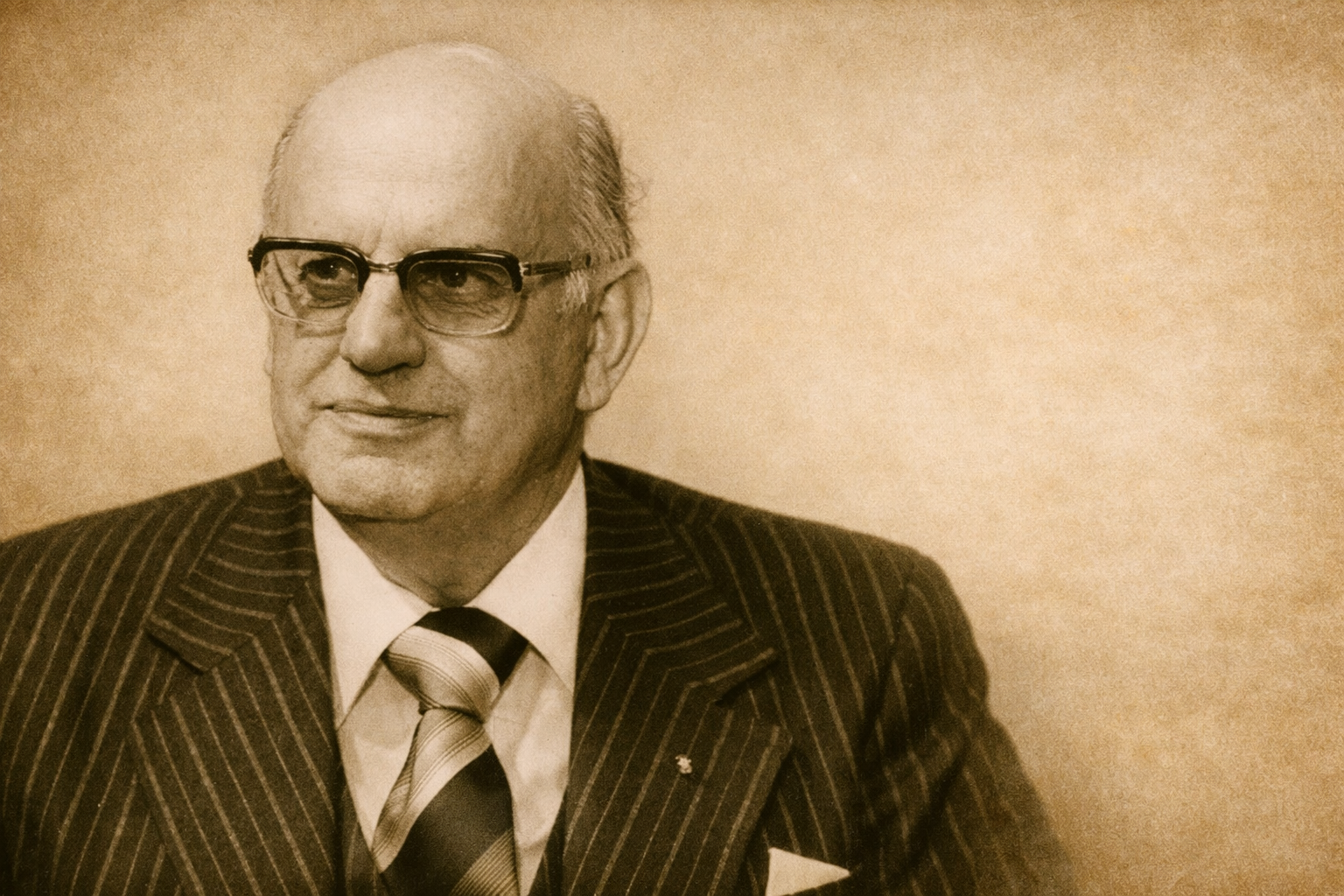
Born on this day, January 12 in 1916, Pieter Willem Botha would rise to become one of the most consequential — and controversial — figures in South Africa’s modern political history. Known to supporters as “PW” and to critics as “the Groot Krokodil” (“the Great Crocodile”), Botha presided over a turbulent era marked by reform, repression, and the mounting pressures that would eventually force the dismantling of apartheid.
Botha entered politics early, winning a parliamentary seat in 1948 — the same year the National Party formally instituted apartheid. Over the next three decades, he climbed steadily through the ranks, holding a series of powerful cabinet posts. He served as Minister of Commercial Development, Minister of Coloured Affairs, Minister of Public Works, and later Minister of Defense, a role that would define his political persona. As defense minister, Botha oversaw the militarization of the state and the expansion of South Africa’s regional interventions during the Cold War.
In 1978, following the resignation of Prime Minister B.J. Vorster, Botha assumed the premiership. His tenure as Prime Minister (1978–1984) was marked by a paradoxical blend of limited reform and intensified security measures. He introduced the tricameral parliament, granting separate chambers to white, Coloured, and Indian South Africans — while still excluding the Black majority. The move was presented as modernization but widely condemned as entrenching apartheid under a new structure.
In 1984, South Africa adopted a new constitution, and Botha became the country’s first executive State President, consolidating unprecedented power in the presidency. From this position, he launched what he called “reform from within,” easing some restrictions while refusing to negotiate with the African National Congress unless it renounced armed struggle. His famous declaration — “I am not prepared to lead white South Africans and other minority groups on a road to abdication and suicide” — captured his uncompromising stance.
By the late 1980s, mounting internal unrest and international pressure weakened his position. After suffering a stroke, Botha resigned in 1989, leaving behind a deeply divided nation on the brink of historic change.
Pieter Botha remains a pivotal figure — a leader whose policies shaped the final chapter of apartheid and set the stage for the negotiations that would follow.
Botha died of natural causes at his home in Wilderness, South Africa in 2006, aged 90.