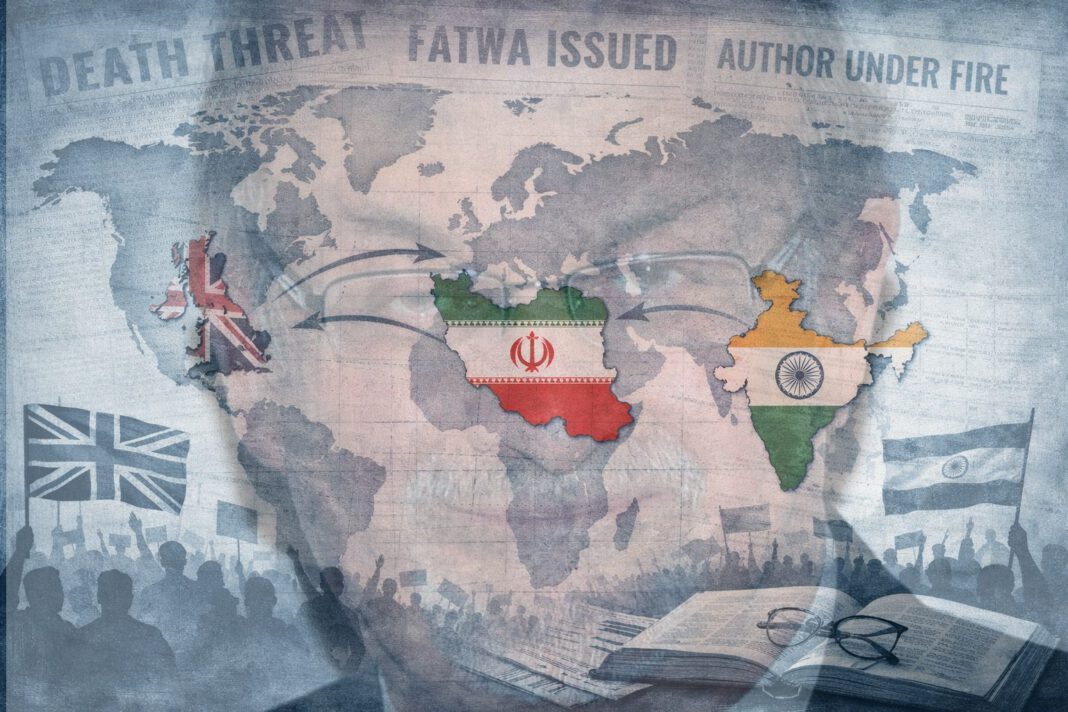


The British author of Indian origin, Salman Rushdie, was declared an outlaw on this day in 1989, by a decree (fatwa) issued by Iran’s Supreme Leader Ayatollah Khomeini.
The decision came in response to his novel The Satanic Verses, which most Muslims saw as an insult to the Prophet Muhammad and to Islam itself.
Hundreds of thousands of Muslims in many Islamic capitals took to the streets in massive demonstrations supporting Khomeini’s decree and expressing outrage at what they viewed as an offense to their faith and their Prophet. The protests targeted British embassies in particular, since the book had been printed and published in London.
The second target was American embassies, because Rushdie was planning to travel to the United States to promote his book there. But once he realized the violent reaction to his work and learned of the decree and the six‑million‑dollar reward offered by Iran and several Islamic organizations for information leading to his whereabouts or for carrying out the killing order, he sought protection from Scotland Yard, the British police.
Despite the protection Britain provided, Queen Elizabeth was among the first world figures to acknowledge that the book had offended Muslim sentiments. The novel questioned the divine revelation, portrayed the Prophet Muhammad as fallible, and included passages that Muslims considered disrespectful toward the Prophet’s wives.
The European Union countries, including Britain itself, condemned Khomeini’s decree as an assault on freedom of expression. They withdrew their ambassadors in protest and demanded that Iran revoke the fatwa permitting Rushdie’s killing.
Although Iran later stated that the fatwa was not binding on its government agencies, it never explicitly declared it was null and void.
Salman Ahmed Rushdie was born in Mumbai, India, in 1947 to a Muslim father who was a successful businessman. He graduated from Cambridge University with a degree in history and wrote several novels, the most notable being Midnight’s Children, Shame, and East, West (published in 1994), along with a collection of short stories.
In February 1989, Rushdie expressed regret for offending Muslims and announced that he had asked his publisher to temporarily halt the printing of new copies of the book.